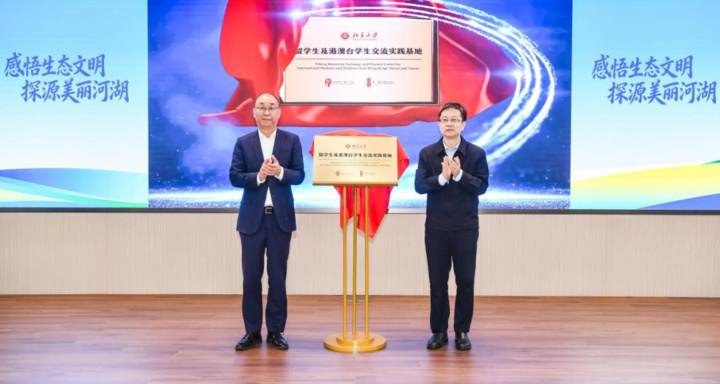
Peking University officially inaugurated an exchange and practice base for international students and students from China's Hong Kong, Macao and Taiwan at the Jiangsu Provincial Department of Ecology and Environment, marking the launch of the program’s first study tour.
The initiative is the first exchange base established by Peking University within China’s national ecological and environmental system.
At the inauguration ceremony, Gong Qihuang, President of Peking University and an academician of the Chinese Academy of Sciences, encouraged students to become witnesses to green development, advocates of cross-cultural understanding, and promoters of friendship between China and the international community. He called on participants to share Jiangsu’s experience in balancing high-quality economic development with high-level environmental protection and to help tell the story of China’s ecological progress.
Chen Zhongwei, Vice Governor of Jiangsu Province, addressed a speech, urging the students to deepen their understanding of China through travel and exchange while strengthening cooperation and academic collaboration. He also expressed hope that more research achievements would be translated into practical outcomes in Jiangsu.
According to Zu Liyati, the base will build on Jiangsu’s achievements in ecological governance and serve as a platform linking Peking University’s academic resources with local development practices. The initiative is expected to expand cooperation mechanisms and create new opportunities for collaboration in the environmental sector.
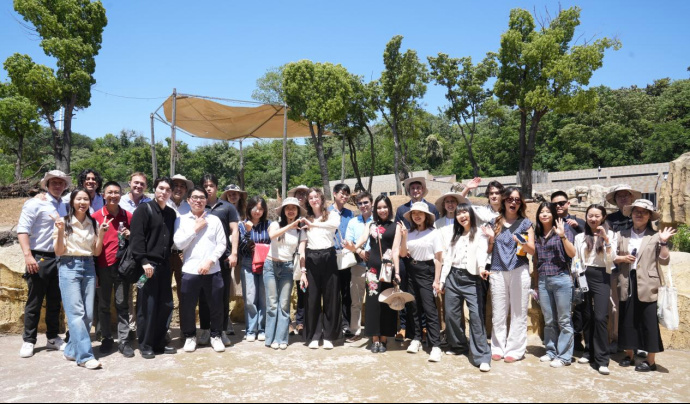
Following the ceremony, 25 students from 13 countries as well as from Hong Kong, Macao and Taiwan regions began a study tour across Nanjing, Yangzhou, Changzhou and Wuxi, where they explored local ecological initiatives and cultural heritage preservation efforts.
During a visit to Hongshan Forest Zoo in Nanjing, German student Konstantin Garbers praised the zoo’s biodiversity protection philosophy, saying its thoughtful design reflected a genuine respect for animals.
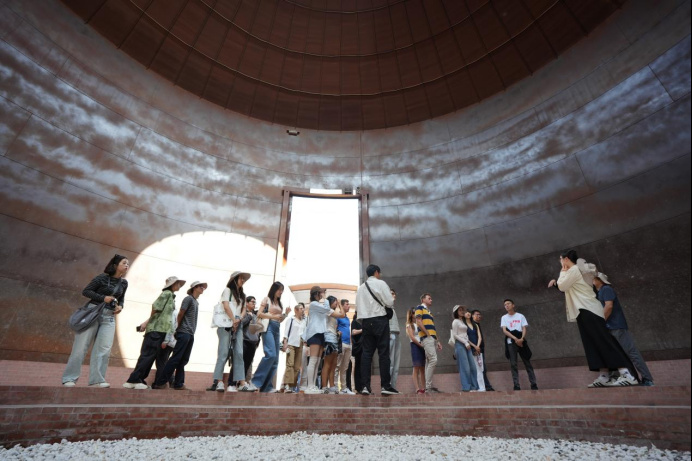
At the China Grand Canal Museum in Yangzhou, Amalie Sofie Niegel from Denmark said the museum showcased not only history but also the future, highlighting the strong commitment to protecting the Grand Canal and supporting the communities along it.
In Changzhou, students toured an Everbright Environmental Protection energy plant, where Samuel Gonzalez Franco from Columbia expressed surprise at the facility’s modern design and environmental standards. He said the plant resembled an eco-park more than a waste incineration facility and praised China’s environmental technologies.
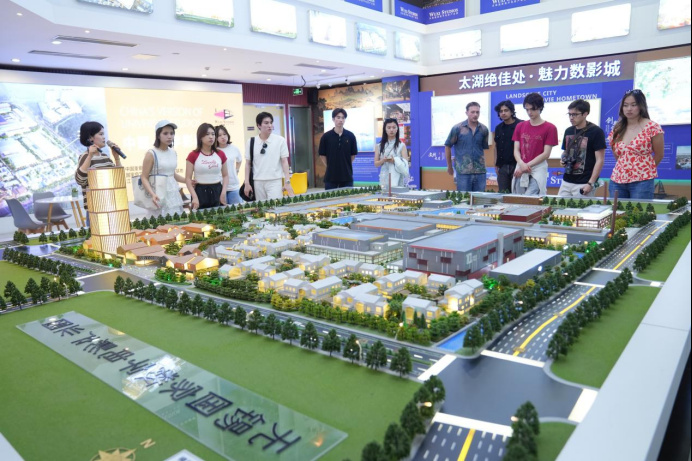
In Wuxi, the students observed advanced technological systems used for the protection of Taihu Lake. Malaysian student Lawrence Leroy Tze Yao Chieng said he had not realized the scale and precision of the technology involved in lake management and water treatment.
The study tour was in the aim to provide international students with firsthand insight into China’s ecological governance practices while strengthening academic and cultural exchanges.