A tailor-made seawater desalination system developed by a private company in Jiangsu's Nantong city is expected to help ease the chronic freshwater crisis in Madagascar, as news came from a visit of a high-level Malagasy delegation in Nantong on July 20.
Although Madagascar is surrounded by the Indian Ocean, its inland water scarcity is severe. In the western region alone, wells dug to 20 meters often yield no stable supply. Ensuring safe water for over 10 million people remains a pressing challenge.
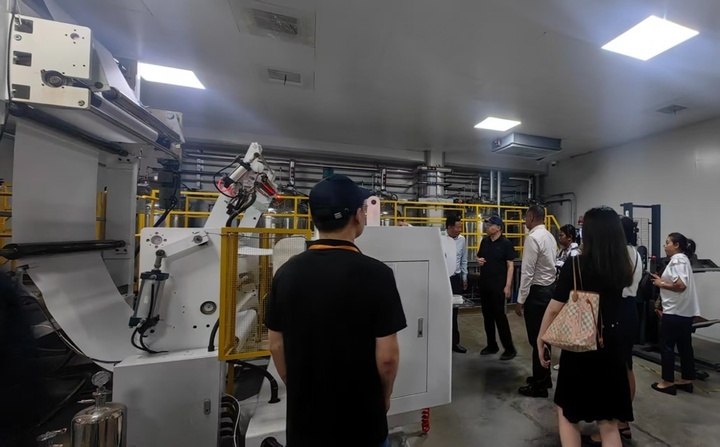
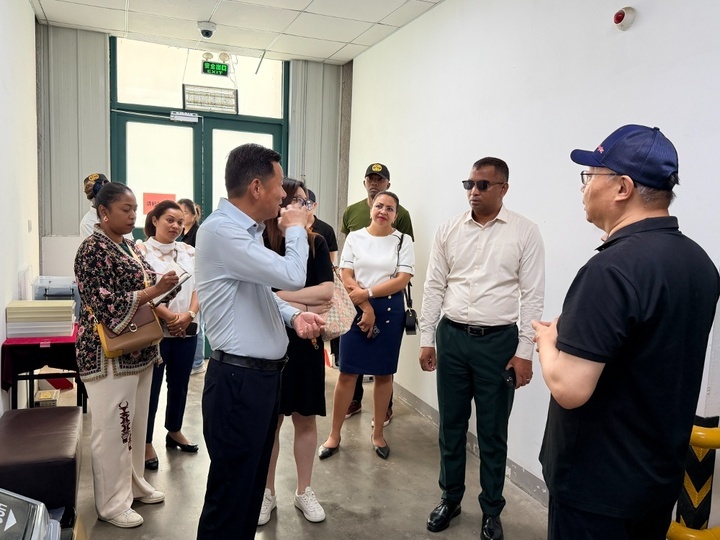
The delegation of Malagasy officials visited Tuobang Huachuang Technology Co., Ltd in the Nantong National High-tech Industrial Development Zone (NHIZ). The cross-border connection was initiated by Zhu Wenjie, head of the Madagascar Nantong Chamber of Commerce. At a Nantong entrepreneurs' gathering in February, he met Zhao Huiyu, CEO of Tuobang Huachuang. The firm, with a research team of over 100 professionals including 12 PhDs, holds more than 50 patents for anti-fouling reverse osmosis membranes and compact desalination units, which may help find a way to cope with the water shortage challenge.
Impressed by the technology, Zhu introduced the company to local authorities in Madagascar. An official delegation was soon organized to cooperate with engineers and technicians in Nantong.
The critical obstacle, however, extended beyond water. Madagascar's power grid is weak and unstable. Large desalination plants demand steady electricity and skilled maintenance, conditions absent in scattered coastal communities. Ordinary small-scale units simply cannot function reliably there.
To meet the specific needs, Tuobang Huachuang assembled a special R&D team. Within three months, it proposed a "solar-storage-desalination" integrated solution: photovoltaic panels generate power, storage batteries buffer and regulate it, and the desalination system runs entirely off-grid. All key components were sourced and assembled within NHIZ.
When the Malagasy delegation visited the company in Nantong, they observed the containerized demonstration unit. Simulated seawater was fed in, and minutes later, clear potable water streamed out. When the portable meters confirmed it met all drinking water standards, the delegation burst into applause.

According to Zhao Huiyu, a full-scale unit can produce 250 metric tons of fresh water daily, enough for about 100,000 people based on 2.5 liters per capita. Built for corrosive marine environments, the equipment can operate stably for eight to ten years and starts with a single switch after simple hookups.
Following the demo, the two sides signed a framework agreement. A first unit, packed in a 40-foot container, will be shipped to Madagascar within three months. If verified, larger systems will be deployed through government-facilitated negotiations between the Nantong company and local water utilities in Madagascar.
Zhao noted the company would soon dispatch a five-member technical team to Africa for installation and training. "If successful, we can replicate this model for other water-scarce countries. This is a vivid practice of China-Africa cooperation that addresses real humanitarian needs through accessible technology," he said.