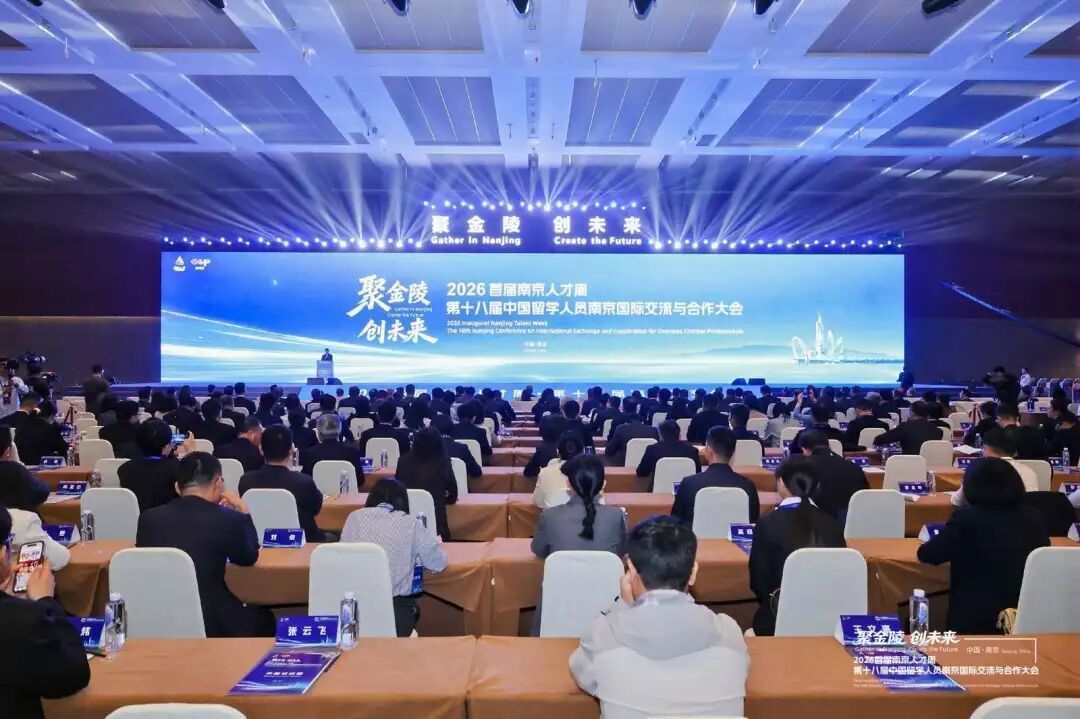
The 2026 Inaugural Nanjing Talent Week opened on Sunday at the Nanjing International Expo Center, together with The 18th Nanjing Conference on International Exchange and Cooperation for Overseas Chinese Professionals. Researchers, entrepreneurs and academicians from home and abroad gathered in the city for a week of recruitment, roadshows and policy announcements under the slogan "Gather in Nanjing, Create the Future."
The event upgrades the city's Talent Day, held annually since 2023, into a full week. Nanjing has been named one of China's best cities for attracting talent for four consecutive years. This year's programme focuses on high-level, young and overseas talent, and is built around three platforms: release of achievements, exchange and cooperation, and on-site study tours.
"Full of substance": policies with real weight
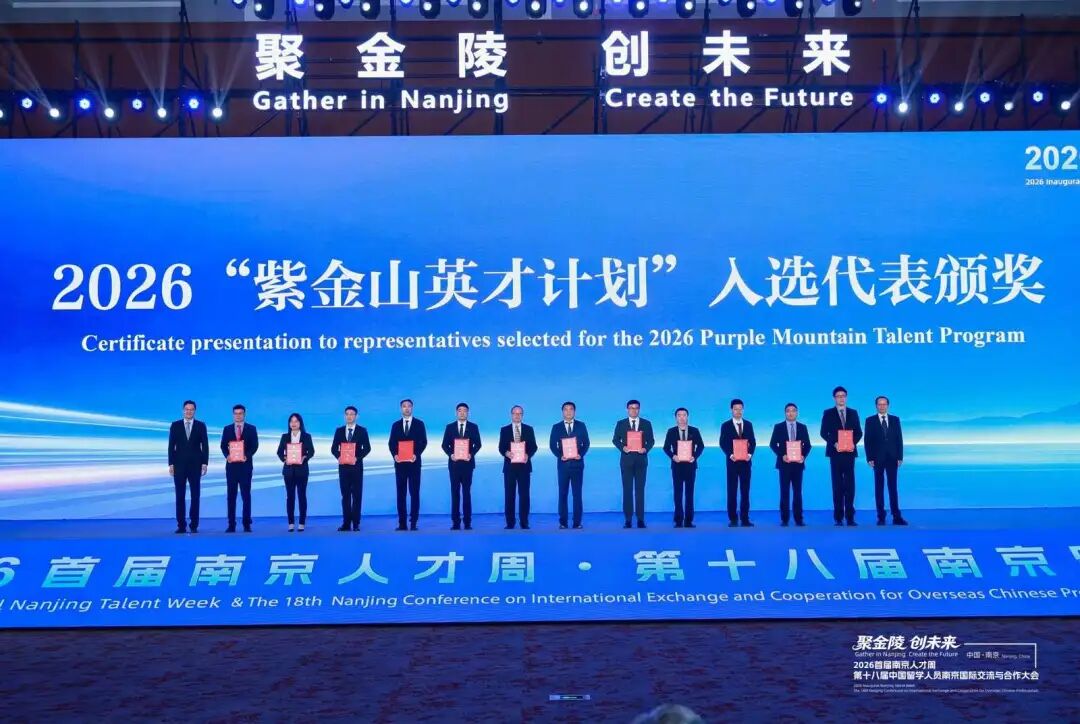
At the opening ceremony, representatives of the Zijin Mountain Talent Program received their certificates, while the "Startup in Nanjing" roadshow series pushed promising projects from the competition floor towards the market, with a group of investment institutions and talent-led firms signing agreements on the spot.
Nanjing's economic weight underpins the pitch. Its GDP ranks among the top ten of China's large and medium-sized cities and is expected to exceed 2 trillion yuan this year; per capita GDP has passed 200,000 yuan, first among provincial capitals. The city ranks fifth nationally in the innovation-capacity assessment of China's innovative cities, and the Zijinshan Laboratory has recorded more than ten "world-firsts" in core technologies.
The city is scaling up its "investing in people" approach through the "One Million Young People Gather in Nanjing" campaign and the Zijin Mountain Talent Program, strengthening support across employment, housing and career growth. In the first three quarters of this year, 269,000 young talents came to Nanjing — already more than in the whole of last year. The city is also training "science-and-technology deputies," "industry professors" and technology managers to move laboratory results onto production lines faster.
"Full of sincerity": services that reach people
Hu Chaoyang, general manager of Nanjing Haixincheng Technology and a veteran optoelectronics expert selected for a municipal innovation programme this year, told the audience that the city's attentive end-to-end service and deep reservoir of science and education resources made it "the best choice" for landing his company's industry.
The city also unveiled its first batch of municipal human resources service consortia, which bring HR agencies, companies, universities and research institutes together, and appointed experts to its key industry cooperation platforms.
In Nanjing, officials say, talent's "small but crucial matters" are treated as top priorities. A full-cycle, one-stop service reform is under way, the Nanjing Talent online platform is being upgraded, and a multi-tiered support system is being built so that "every talent feels valued, respected and needed."
"Full of energy": an ecosystem on the rise
Nanjing is reserving the "C position" — the centre of the stage — for talent. Over the past year, the city's research-commercialisation task force and its team of science-and-technology officials seconded to towns and districts worked in tandem; the top ten university–local technology-transfer cases were released, and winners of an AIGC contest themed on the city took the stage.
Two specialised talent clusters, for biomedicine and green smart agriculture, were inaugurated. The municipal talent office signed an agreement with the China Academic Degrees and Graduate Education Society to co-host a national graduate innovation contest and build a joint incubation base. Nanjing also issued a global talent demand catalogue covering artificial intelligence (software), robotics, biomedicine and next-generation information and communications.
Cities along the Shanghai–Nanjing industrial innovation belt — home to 40 national-level economic and high-tech development zones that generate more than 12 percent of China's GDP from just 0.6 percent of its land — jointly issued a cooperation initiative on talent development. Nanjing pledged more OPC communities, maker spaces and business incubators, and greater autonomy for employers in recruiting, evaluating and recommending talent.
The week closes with the city's message to the world: "Gather in Nanjing, Create the Future — Nanjing is better with you." In the local dialect, "laisi" means something is genuinely great; it is Nanjing's way of saying that its future and its talent grow together.