The 10th Future Network Development Conference opened at the Nanjing Shangqinhuai International Cultural Exchange Center on October 16. Hosted by the Nanjing Municipal People's Government and organized by Purple Mountain Laboratories, the China Institute of Communications, the Jiangsu Future Networks Innovation Institute and Jiangsu Future Network Group, the event marked a decade of China's flagship future network gathering.

At the opening ceremony, Liu Yunjie, an academician of the Chinese Academy of Engineering, and You Xiaohu, an academician of the Chinese Academy of Sciences, released three major research achievements, together with the debut of ten benchmark innovation scenarios for future networks.
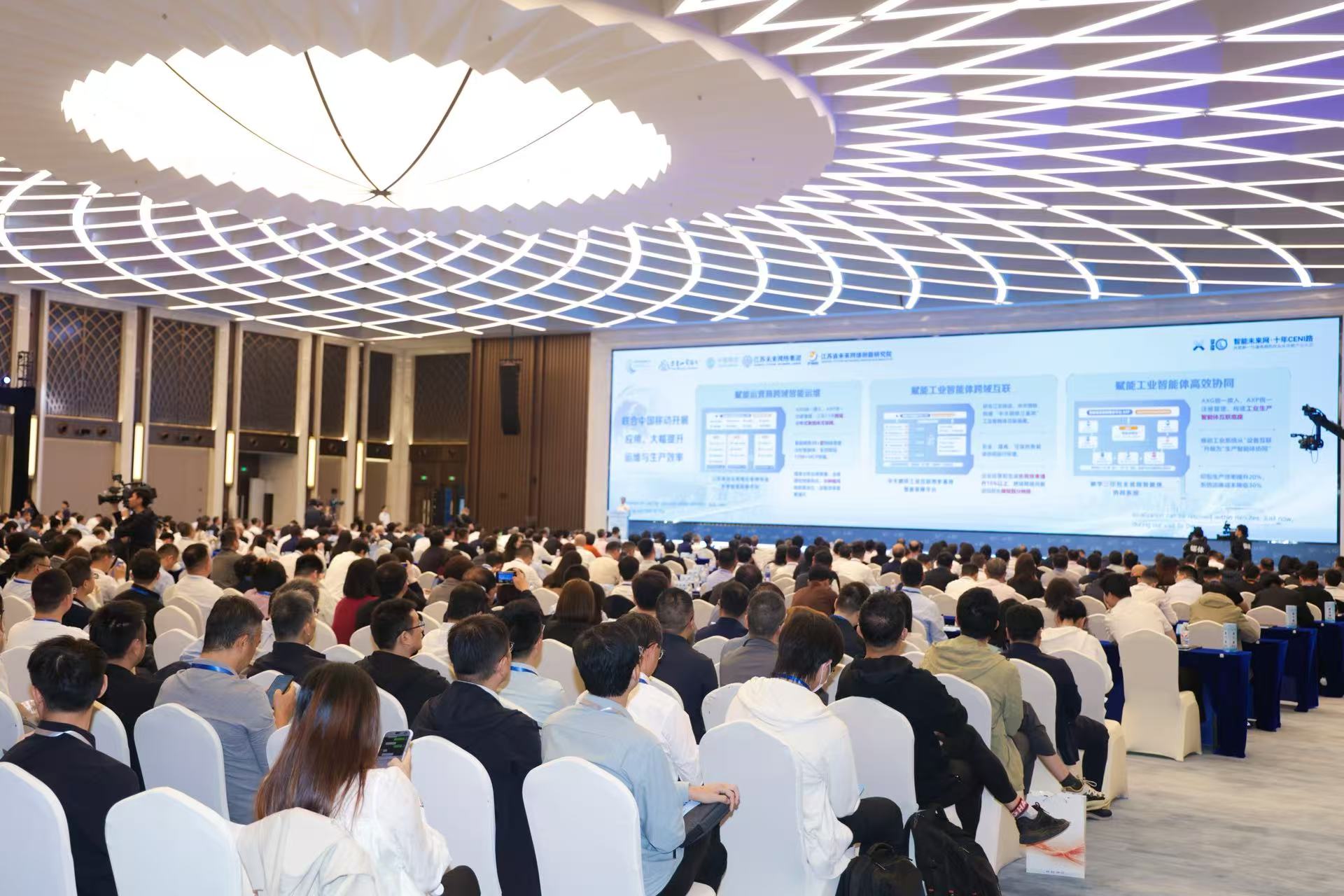
Three major research achievements include AXP, an agent interconnection platform built on deterministic networking, developed by Purple Mountain Laboratories with China Mobile, Jiangsu Future Network Group and the Jiangsu Future Networks Innovation Institute. It unifies protocol conversion among heterogeneous AI agents, supports registration of one million agents with 100,000 running concurrently, and delivers second-scale fault detection and switchover with sub-100-millisecond semantic addressing. Leveraging China Environment for Network Innovations (CENI), the China Environment for Network Innovations, it achieves high-precision cross-domain agent addressing over distances of more than 4,000 kilometers and cuts end-to-end task execution time by over 20 percent.
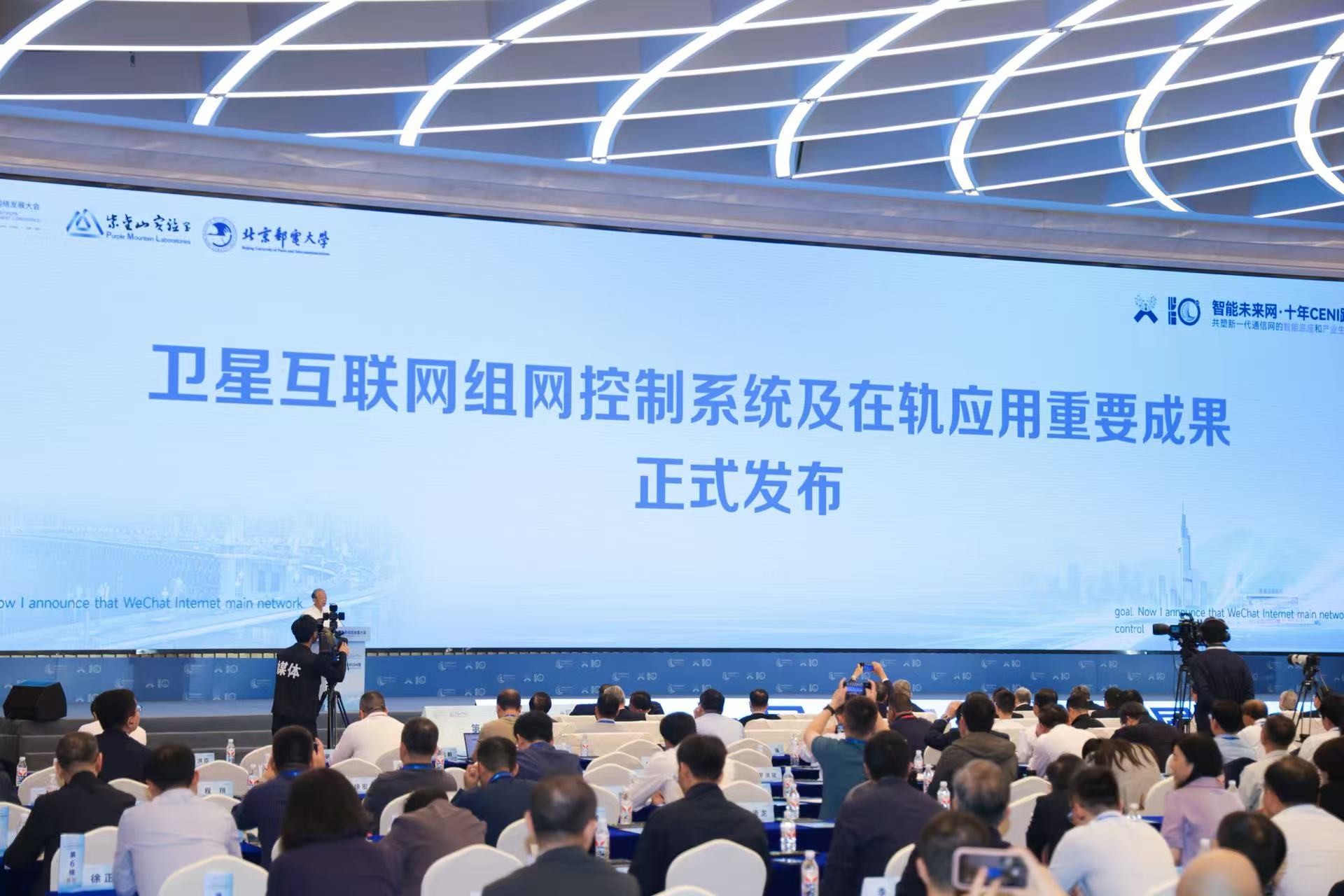
The second is a satellite internet networking control system that has been applied in orbit, which has served as the "network brain" of China's satellite internet, controlling hundreds of satellites in orbit. Real-world data show sub-second dedicated-link setup, 100-millisecond-level routing fault recovery and a 15-percent boost in space-ground transmission capacity.
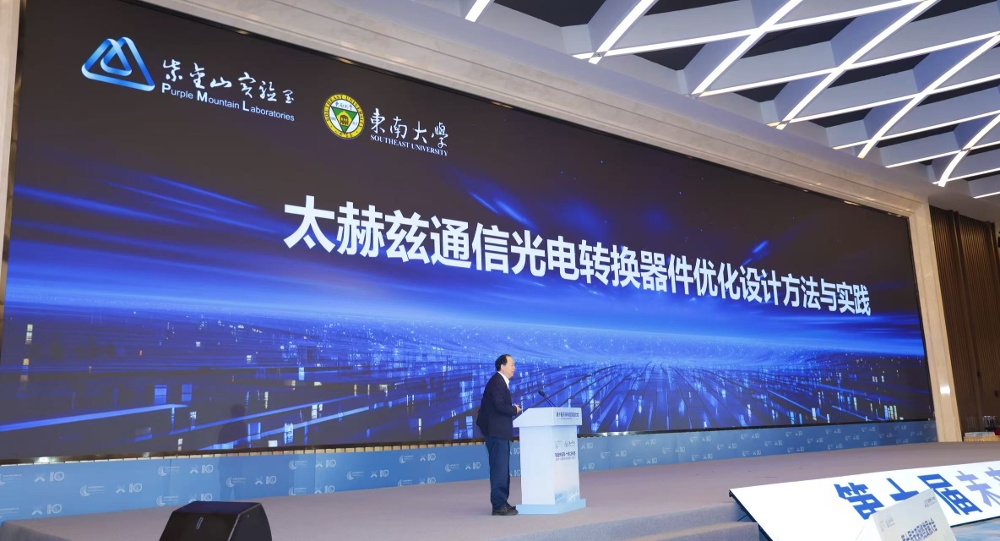
The third is an optimized design method and practice for terahertz photoelectric conversion devices. Purple Mountain Laboratories independently developed a uni-traveling-carrier photodiode (UTC-PD) chip with a 3-dB bandwidth of 236 GHz and demonstrated D-band dual-polarization 100-Gbps over-the-air transmission, reaching a rate-distance product of 2,600 Gbps·km, a key step toward 6G photonic-terahertz communications.
The ten innovation scenarios, selected in the areas of network transformation, resource supply and industrial empowerment, have already delivered results in scientific research, meteorology, transport and manufacturing, building a solid connectivity foundation for an intelligent society.