On January 1, 2026, a research team led by Professor Ding Jintai at the Post-Quantum Cryptography Migration Cross Laboratory of Xi'an Jiaotong-Liverpool University (PQC-X) successfully solved the SVP-210-dimensional Shortest Vector Problem, achieving a world-leading breakthrough in the security analysis of lattice-based cryptography—a mainstream global quantum-resistant cryptographic approach. This accomplishment provides crucial theoretical support for the scientific and prudent global migration to quantum-resistant cryptography.

The solution to the SVP-210-dimensional challenge has broken the previous global record held by the same team. This marks another significant advancement in lattice-based cryptography security analysis by Professor Ding Jintai and his team, following their deciphering of the SVP-200-dimensional problem in March 2025 and their successful cracking of a Kyber-208 instance—a post-quantum cryptography standard—in November of the same year. Professor Ding Jintai, Director of the Post-Quantum Cryptography Migration Cross Laboratory, Dean of the School of Mathematical and Physical Sciences, and an international evaluator for China's new generation of quantum-resistant cryptographic algorithm selection initiative, stated that the team currently adopts an "attack-to-defend" model aimed at conducting high-intensity stress tests on existing mathematical defenses. He emphasized that solving the SVP-210-dimensional problem will offer critical parameter correction benchmarks for global post-quantum cryptography standards, verifying the reliability of financial-grade security defenses.
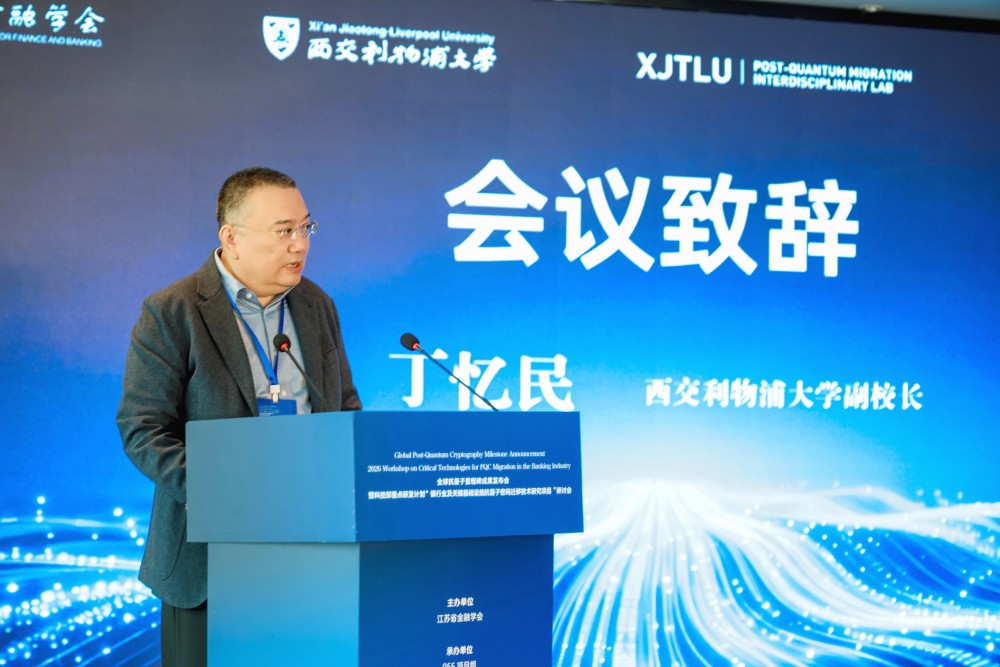
Dr. Ding Yimin, Vice President of Xi'an Jiaotong-Liverpool University, noted that the university firmly believes higher education institutions should not only pursue academic frontiers within the national scientific and technological innovation system but also address national needs and industry urgencies. By leveraging the Post-Quantum Cryptography Migration Cross Laboratory, Xi'an Jiaotong-Liverpool University promotes interdisciplinary collaborative research and deep integration with financial scenarios, striving to transform research achievements into practical and scalable security solutions.
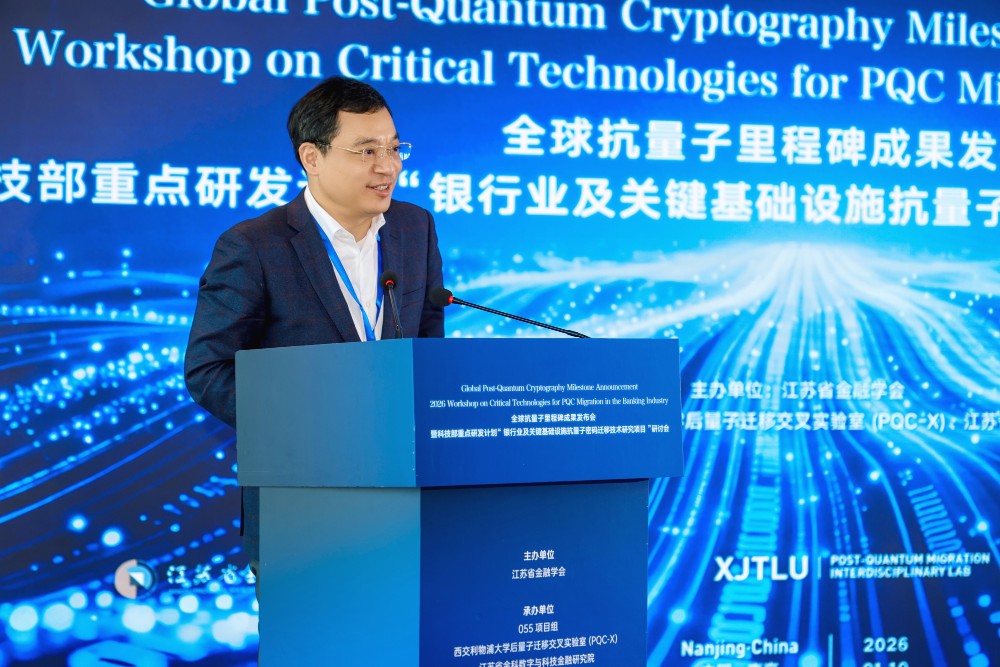
Zhou Chengjun, President of the Jiangsu Provincial Society for Finance, explained that as China's first national-level key research and development initiative focused on quantum-resistant migration for banking critical infrastructure, this project has achieved significant outcomes in core theory, technological breakthroughs, standards formulation, and open collaboration. He stated that subsequent efforts will focus on advancing the transformation of results, deepening collaborative innovation, and expanding strategic layouts, thereby contributing to fortifying the security foundation of financial "new infrastructure," building an integrated ecosystem of "industry-academia-research-application-finance," and serving the overall national financial security.
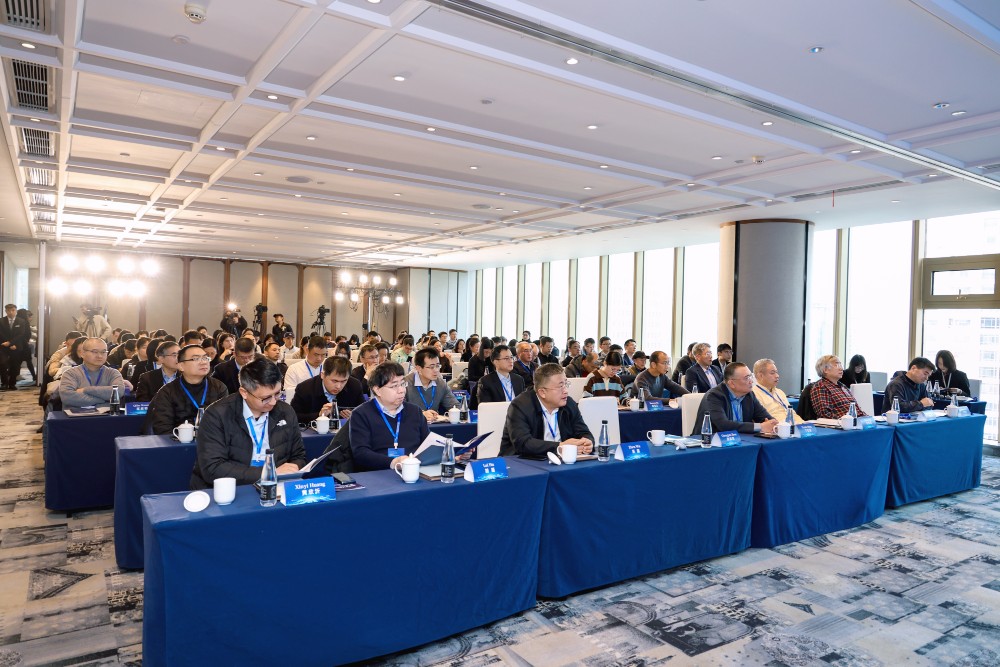
It was reported that China Construction Bank, China CITIC Bank, and Jiangsu Bank, as the first group of pilot institutions, presented relevant application validation results during the meeting. An expert panel from the Chinese Academy of Sciences and China Electronics Technology Group Corporation reviewed the project outcomes, affirming that the technology has reached an internationally leading level in lattice-based cryptography security analysis and provides essential technical reserves for financial infrastructure to address the challenges posed by quantum computing.